By Jesuraj Mariyan
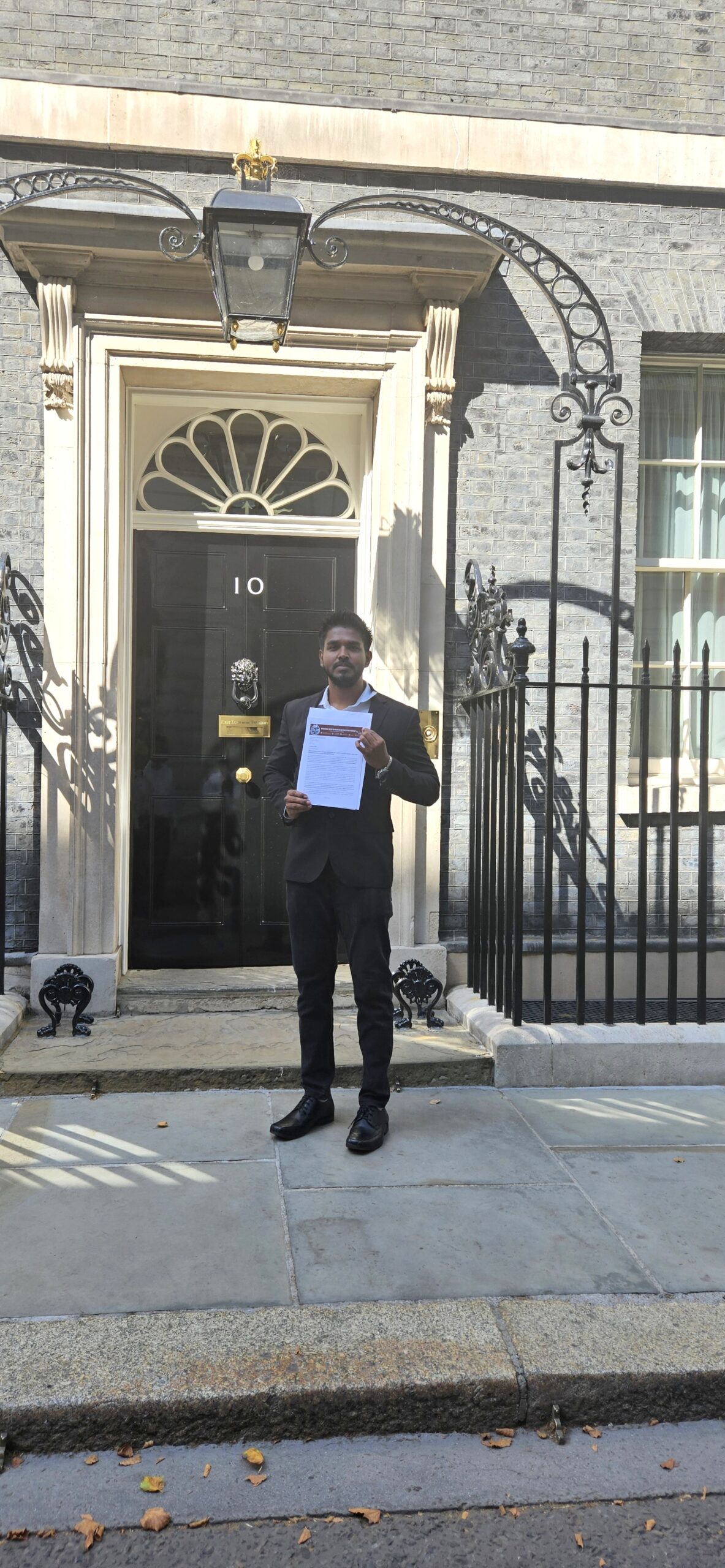
A petition urging the British Government to officially recognise the genocide against Tamils in Sri Lanka and expand sanctions against those accused of responsibility for serious human rights violations has been delivered to 10 Downing Street as part of this year’s Black July remembrance campaign.
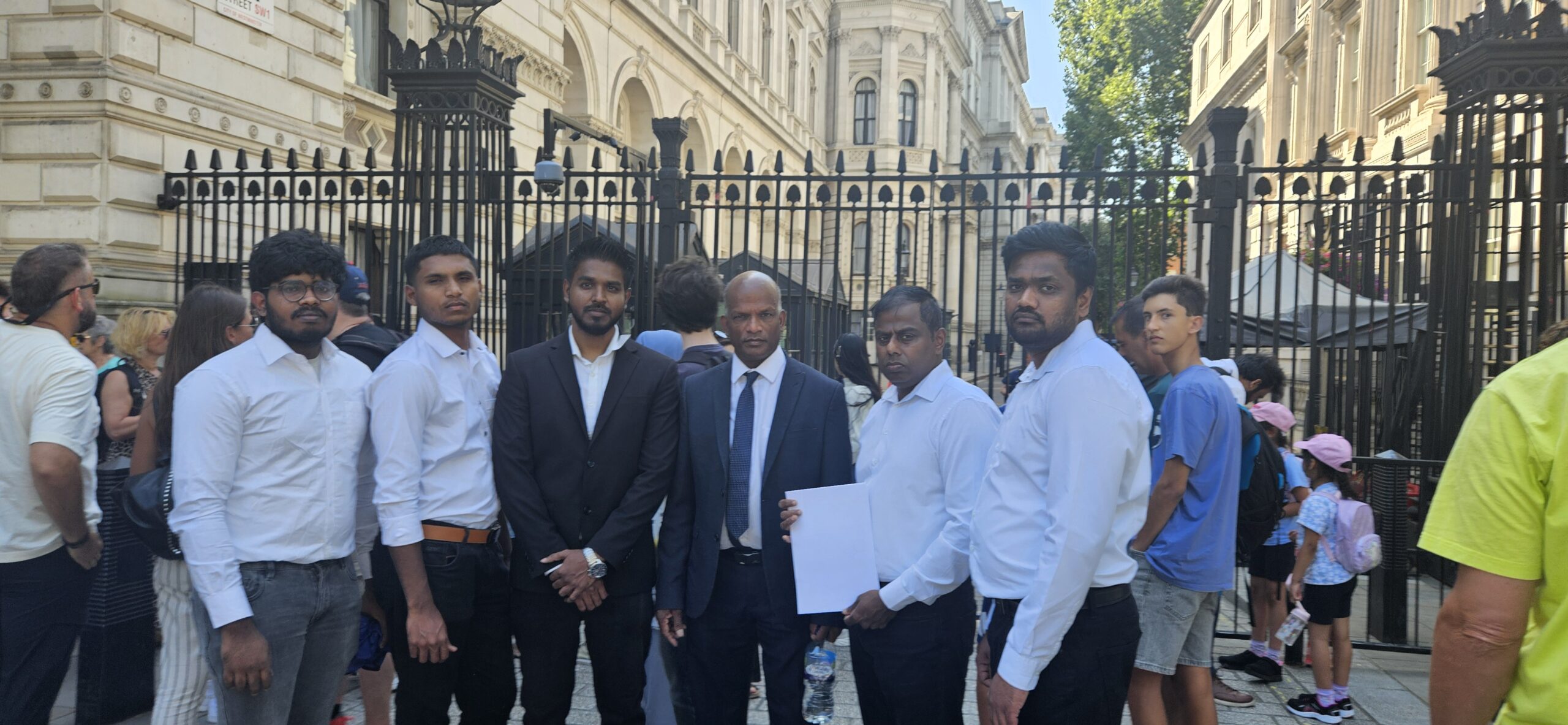
The petition was handed over at 10 Downing Street on 11 August 2026 through the International Centre for Prevention and Prosecution of Genocide (ICPPG). Campaign Manager Jesuraj Mariyan led the delegation, joined by fellow petitioners Hon. Dr. Sockalingam Yogalingam, Anushan BalaSubramaniam, Vidushan Markandu, Loshariyan Suresh and Kovarthan Ganesapillai.
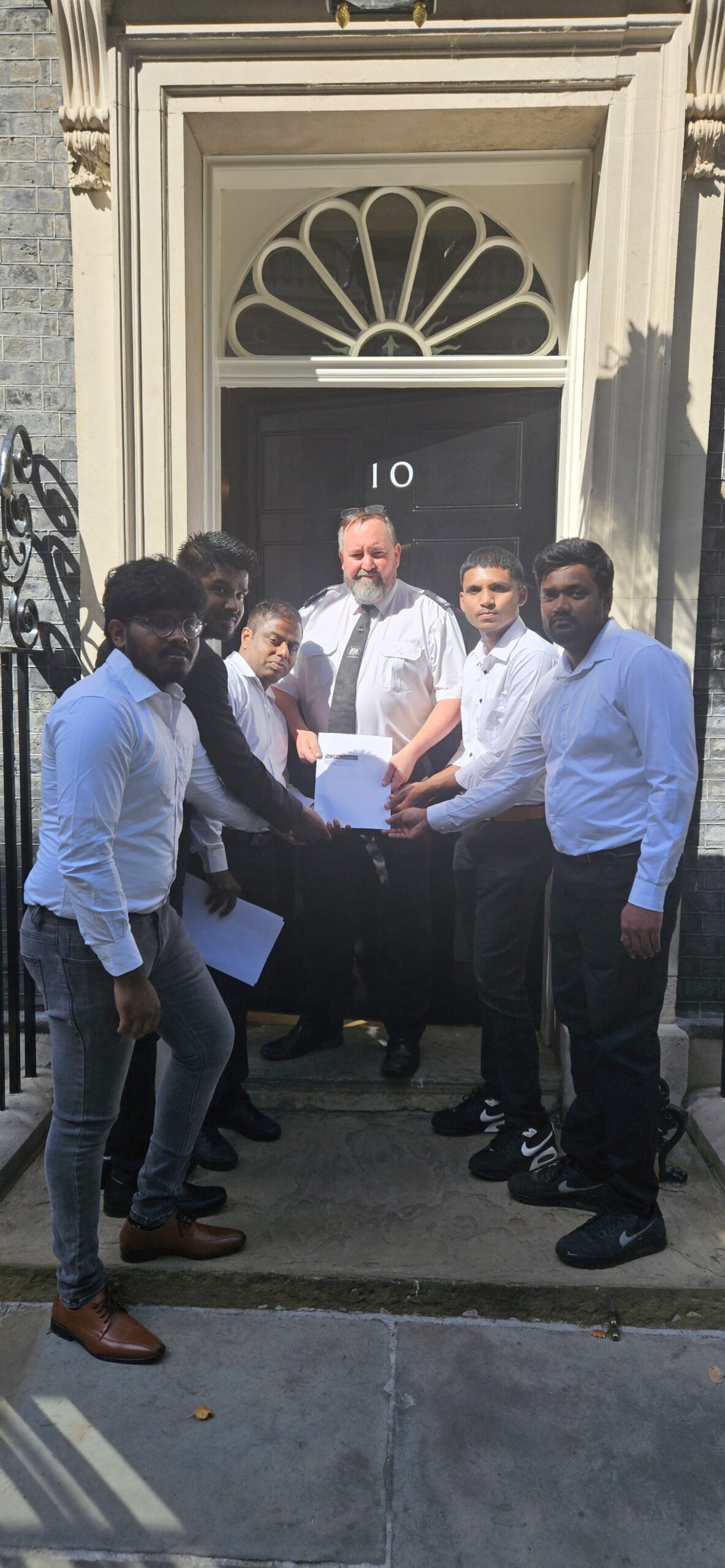 The campaign urges Prime Minister Andy Burnham and his government to take stronger action on accountability for atrocities committed against Sri Lankan Tamils. Among its principal demands is formal British recognition of what campaigners describe as the Tamil genocide, alongside an expansion of targeted sanctions against individuals alleged to have been involved in grave violations.
The petition was presented in the context of the annual commemoration of Black July, the anti-Tamil pogrom that began in Sri Lanka in July 1983. Thousands of Tamils were killed, while many more were displaced and forced to flee their homes. Historical accounts have documented attacks on Tamil homes, businesses and communities, with electoral registers reportedly used in some areas to identify Tamil-owned properties.
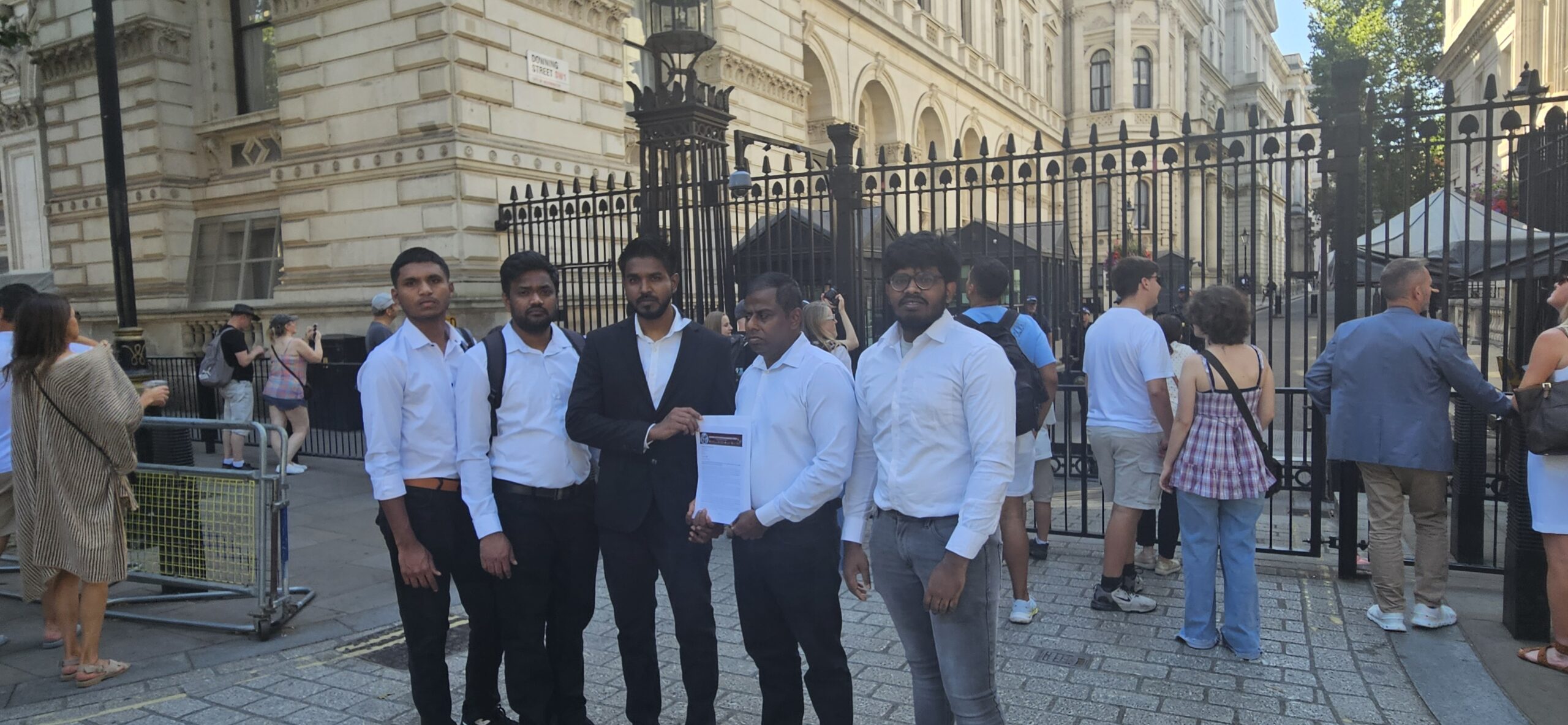 Furthermore, the petition expresses sincere appreciation to the United Kingdom Government and the Foreign, Commonwealth & Development Office for their important and principled decision on 24 March 2025 to impose targeted sanctions against Shavendra Silva, Wasantha Karannagoda, Jagath Jayasuriya, and Vinayagamoorthy Muralitharan under the Global Human Rights Sanctions Regulations.
For Tamil communities in Britain and across the diaspora, Black July remains a defining symbol of the violence and persecution experienced by Tamils in Sri Lanka. Campaigners argue that the events of 1983 must be understood alongside subsequent allegations of mass killings, enforced disappearances, torture and other abuses during Sri Lanka’s long civil war.
The petition’s organisers say recognition by the UK would represent an important step towards truth, justice and accountability. They are also calling for the British government to broaden sanctions against alleged perpetrators, arguing that existing measures do not go far enough.
The campaigners now hope the petition will prompt the government to consider concrete measures on recognition, sanctions and international accountability, keeping the experiences of victims and survivors at the centre of Britain’s engagement with Sri Lanka.